
There is a moment every year when the light changes.
The days may still be warm, especially here in the South, but the sun starts setting a little differently. Evenings feel softer. You begin reaching for a throw when you sit down, thinking about candles again, and wanting your home to feel a little warmer and more settled.
That is when I start thinking about fall.
Not because I suddenly need pumpkins on every available surface.
Seasonal decorating, at its best, is not about turning your home into a theme. It is about responding to the season while still respecting the home you have already created.
Your house should still look like your house in October.
It should simply feel like fall has arrived.
Start With a Feeling, Not a Theme
Before buying anything, decide what you actually want your home to feel like.
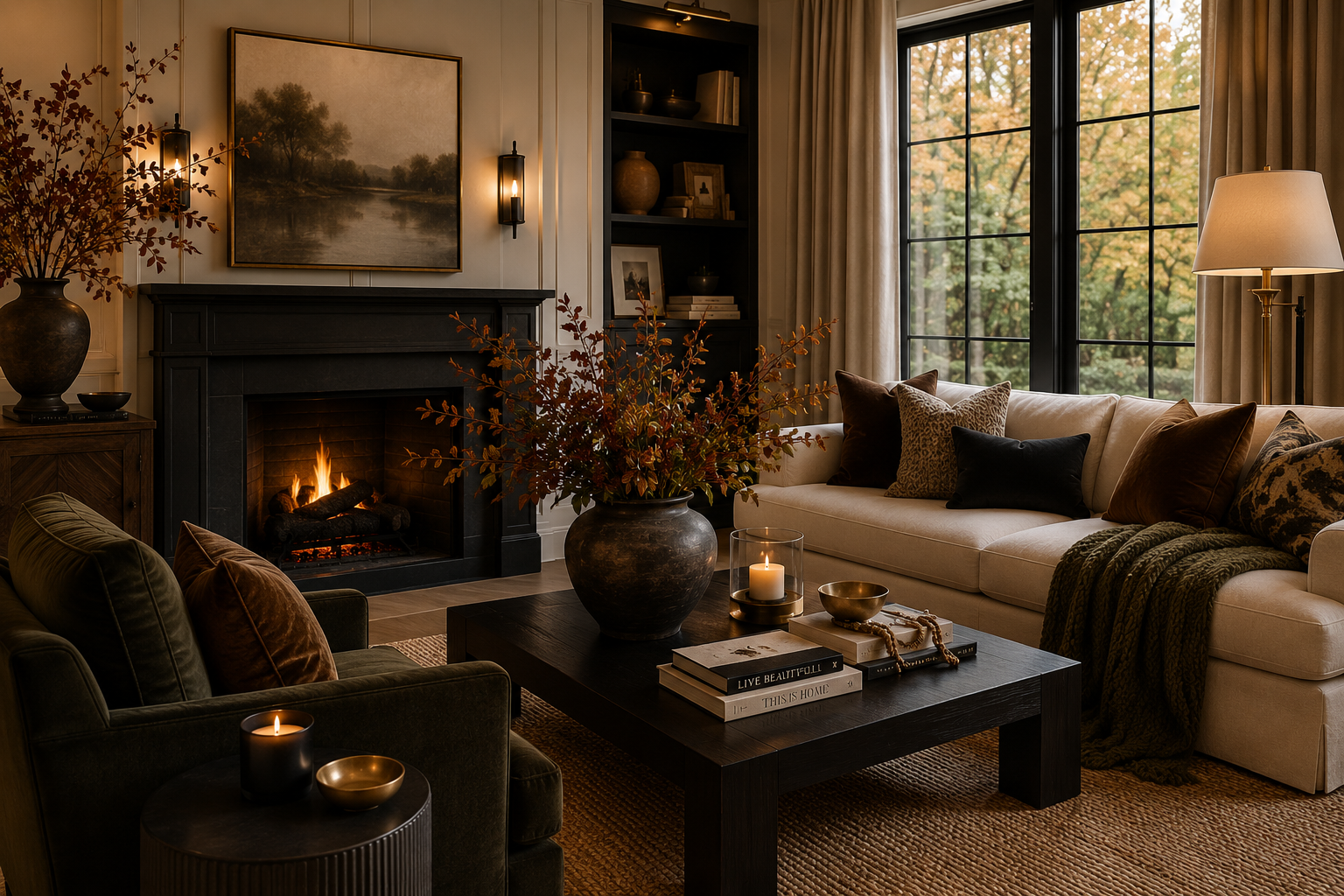
For me, fall is layered, warm, comfortable and grounded. It is deeper color, richer texture, softer lighting and natural materials. It is the feeling of wanting to stay home a little longer.
None of those things require a pumpkin.
This is where seasonal decorating often goes sideways. We walk into a store in August and suddenly there are entire aisles telling us what fall is supposed to look like: orange leaves, plaid signs, scarecrows, pumpkins, more pumpkins and something somewhere announcing that it is, indeed, fall.
You don’t need your decor to tell people what month it is.
Let the feeling of the room do that.
Work With the Home You Already Have
One of the easiest ways to make seasonal decorating look disconnected is to introduce an entirely different color palette for three months.
If your home is neutral and sophisticated all year, you don’t suddenly need bright orange because September arrived.
Look at what is already there.
A room with black, cream and warm wood might move into fall beautifully with camel, chocolate, cognac or olive. A cooler neutral room might take on burgundy, plum or deep green. Brass, aged metals, darker woods and earthy browns can add warmth without changing the entire personality of the space.
Even traditional fall colors can be beautiful when they are used thoughtfully. Rust, burnt orange and ochre are wonderful colors. They simply don’t have to appear together—or everywhere.
Seasonal color should join the conversation your home is already having, not walk into the room shouting over everybody.

Texture Will Take You Further Than Decorations
If I had to choose between adding ten fall decorations or changing three textures in a room, I would choose texture every time.
Texture changes how a space feels.
A lightweight summer throw can be replaced with something heavier. Crisp bedding can gain a quilt or textured blanket. Linen can sit beside velvet. Bouclé, wool, woven fabrics, leather, wood and heavier natural fibers all bring visual warmth.
You don’t have to replace everything.
Sometimes one beautiful throw draped over the arm of a chair, a deeper pillow on the sofa and a heavier layer at the foot of the bed are enough to shift the entire room.
And yes, pillows are useful.
No, you do not need seventeen of them. 😂
Seasonal decorating should make your home more comfortable—not create a nightly pillow-removal exercise before anyone can sit down.

Let Nature Do Some of the Decorating
Fall provides some of the best decorating materials without requiring much embellishment.
Branches have movement and scale. Magnolia leaves have incredible color and texture. Dried grasses, seed pods and seasonal foliage can bring the outdoors inside without making the room feel overly decorated.
A substantial arrangement of branches in one beautiful vessel can have far more impact than a dozen small seasonal objects scattered around a room.
That scale matters.
Instead of asking, Where else can I put something? try asking, Where would one strong seasonal moment make the biggest difference?
Maybe it is the entry console.
Maybe it is the dining table.
Maybe it is a large vase on the kitchen island.
Give that moment room to breathe.
Not every surface needs backup dancers.

Change the Light
This is one of the most overlooked ways to transition a home into fall.
Summer homes often feel brighter and more open because we are living with longer days and more natural light. As daylight begins to shorten, artificial lighting becomes part of the atmosphere much earlier in the evening.
Use it intentionally.
Turn on the lamps instead of relying only on overhead lighting. Create smaller pools of light around the room. Let a table lamp warm up a dark corner. Use candles where they make sense.
The goal isn’t to make the house dark. It is to create layers of light.
A room lit from one ceiling fixture feels very different from the same room illuminated by a floor lamp, two table lamps and a candle.
And unlike seasonal decorations, good lighting continues working for you long after fall is over.

Your Entry Doesn’t Need a Harvest Festival
The front entry is usually the first place people want to decorate for fall—and it is also one of the easiest places to overdo.
You can create a beautiful seasonal entrance with very little.
A wreath with natural texture. A seasonal rug or mat. A planter with something appropriate for your climate. Maybe a few pumpkins if you genuinely love them.
That’s enough.
The architecture of your home should still be visible.
Your front door does not need to disappear behind hay bales, corn stalks, six lanterns, twelve pumpkins and a sign leaning against another sign.
Give the eye somewhere to rest.
A well-designed entry should feel welcoming before it feels decorated.

Don’t Forget the Rooms Where You Actually Live
Seasonal decorating tends to concentrate around the living room and front porch while the rest of the house stays exactly the same.
But some of the nicest fall changes can happen in quieter spaces.
Add a darker quilt or textured layer to the bedroom.
Bring a richer runner or arrangement to the dining table.
Change the hand towels in the powder room.
Place a branch arrangement somewhere unexpected.
Bring a warmer textile into the reading chair you actually use.
These changes don’t scream fall decor. They simply make everyday spaces feel more appropriate for the season.
That is the kind of decorating I love most—the kind you experience rather than simply look at.

A Word About Scent
Fall scents can be wonderful.
They can also assault you from the driveway.
There is a difference between walking into a home and noticing a subtle warm fragrance and walking into one where cinnamon has apparently become a structural material.
Choose scent the same way you choose everything else in a well-designed room: with restraint.
Wood, amber, fig, vanilla, cedar, sandalwood, tobacco, apple and subtle spice notes can create warmth without making the house smell like a craft store in October.
And if you love pumpkin spice, use pumpkin spice.
I am not here to take anybody’s candle away. 😂
Just remember that fragrance is part of the atmosphere. It doesn’t have to dominate it.
Edit Before You Add
This may be the least exciting fall decorating advice, but it might be the most important.
Before adding seasonal decor, remove something.
If your coffee table already has books, a bowl, decorative objects and flowers, adding three pumpkins does not make it seasonal. It makes it crowded.
Clear the surface first.
Then decide what deserves to return.
Negative space is part of decorating. Your eye needs somewhere to stop before it can appreciate what you intentionally placed in the room.
This is especially important with seasonal collections. When we pull storage bins down every year, there is a temptation to use everything simply because we own it.
You don’t have to.
Decorating isn’t inventory management.
Buy Less. Choose Better.
Seasonal decor can become surprisingly expensive because every individual item seems inexpensive.
A $12 pumpkin doesn’t sound like much.
Neither does a $19 pillow.
Or the $24 wreath.
Or the $15 candle.
Then you get to checkout and somehow fall has cost $347. 😂
Instead of buying a new collection every year, slowly build one that you actually love.
Choose a beautiful wreath you will want to use again.
Buy the substantial throw instead of four inexpensive ones.
Invest in a vessel that can hold spring branches, summer greenery, fall foliage and winter stems.
Use trays, bowls, candleholders and baskets you already own and change what goes inside them.
The best seasonal pieces aren’t always obviously seasonal.
They are versatile pieces that help your home transition throughout the year.
Let Fall Look Like You
There is no correct fall house.
Some people genuinely love orange pumpkins, plaid blankets and traditional harvest colors. If that makes you happy, use them.
Someone else may want black, cream, walnut and magnolia.
Another home may lean into olive, burgundy and antique brass.
All of them can feel like fall.
Good design isn’t about following a seasonal formula. It is about making intentional choices that support the way you want your home to look, feel and function.
That doesn’t change just because the calendar does.

When I decorate for fall, I want the house to feel warmer. I want texture. I want softer evenings and deeper tones. I want the transition to feel natural enough that you may not immediately be able to identify what changed.
You just know the house feels different.
And that is the point.
Your home doesn’t need to become a pumpkin patch to welcome fall.
It only needs to make room for the season.
Leave a Reply